Rethinking Assessments: 5 Innovative Methods Reshaping U.S. Evaluation in 2026
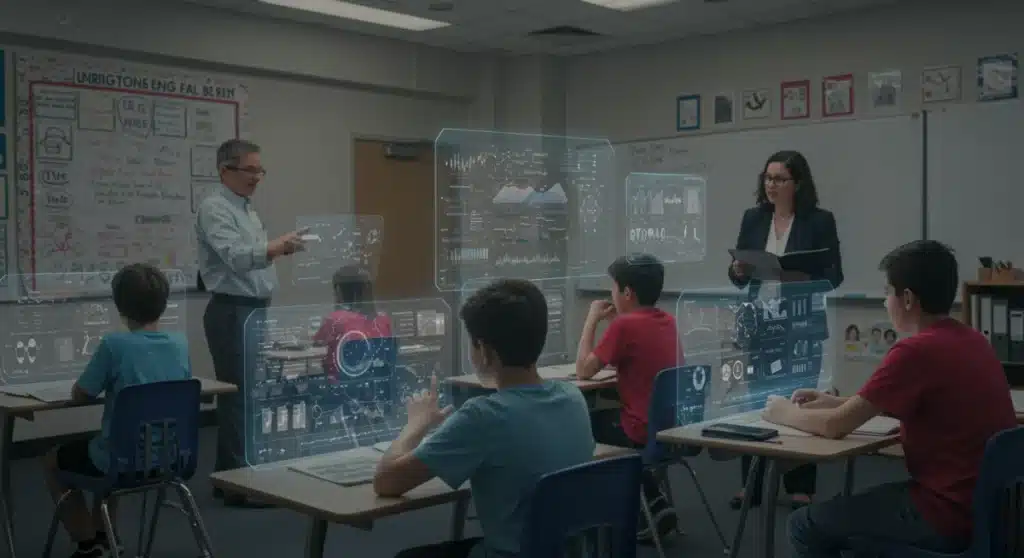
Latest developments on Rethinking Assessments: 5 Innovative Methods Reshaping U.S. Evaluation in 2026, with key facts, verified sources and what readers need to monitor next in Estados Unidos, presented clearly in Inglês (Estados Unidos) (en-US).
Rethinking Assessments: 5 Innovative Methods Reshaping U.S. Evaluation in 2026 is shaping today’s agenda with new details released by officials and industry sources. This update prioritizes what changed, why it matters and what to watch next, in a straightforward news format.
The Urgency for Change in U.S. Education Assessments
The current U.S. education assessment landscape faces increasing scrutiny, with stakeholders calling for more relevant and equitable evaluation methods. Traditional standardized tests are often criticized for failing to capture the full scope of student learning and skills.
This push for change is driven by a recognition that education must evolve to meet the demands of a rapidly changing world. Preparing students for future challenges requires assessment strategies that go beyond rote memorization.
As a result, a significant transformation is underway, focusing on innovative approaches to student evaluation. This shift aims to provide a more holistic and accurate picture of student progress and capabilities.
Personalized Learning Assessments: Tailoring Evaluation to the Individual
One of the most promising methods in rethinking assessments 2026 involves personalized learning assessments. These approaches are designed to adapt to individual student needs, learning styles, and pace, moving away from a one-size-fits-all model.
Personalized assessments leverage technology to create dynamic evaluation experiences. This allows educators to gain deeper insights into each student’s strengths and areas for growth, fostering a more targeted instructional approach.
The goal is to ensure that assessments are not just tools for measurement but also integral parts of the learning process. This integration supports continuous improvement and student engagement.
Adaptive Testing Platforms
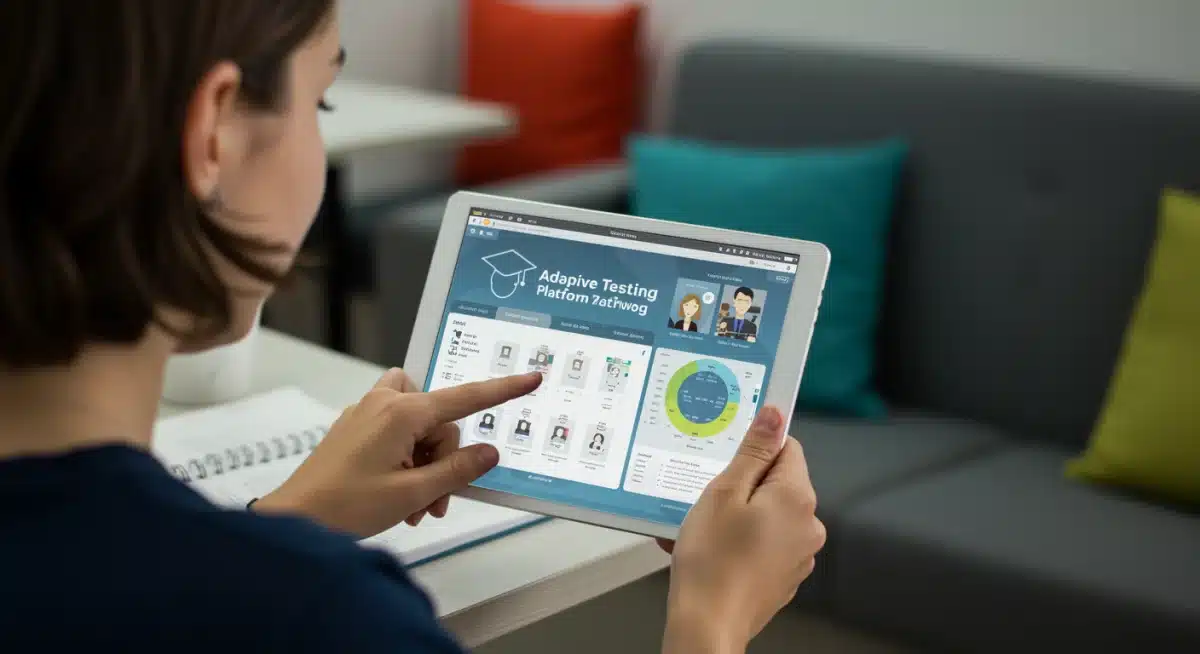
Adaptive testing platforms utilize algorithms to adjust the difficulty of questions in real-time based on a student’s responses. This ensures that each student receives an assessment tailored to their current knowledge level.
Such platforms provide highly precise measurements of student proficiency, reducing testing time while increasing accuracy. They also offer immediate feedback, which is crucial for effective learning.
- Individualized question delivery based on performance.
- Real-time adjustment of difficulty levels.
- Efficient and precise measurement of student abilities.
- Instantaneous feedback for learners and educators.
Formative Assessment Integration
Integrating formative assessments directly into the learning process is another key aspect of personalized evaluation. These ongoing assessments provide continuous feedback, guiding instruction and student learning.
Unlike summative assessments, formative methods are designed to inform teaching and learning decisions, rather than simply measuring outcomes. They are low-stakes and focus on progress rather than just final results.
Competency-Based Evaluation: Focusing on Mastery
Competency-based evaluation represents a fundamental shift in rethinking assessments 2026, emphasizing what students can actually do rather than how much time they spent in a classroom. This method focuses on demonstrating mastery of specific skills and knowledge.
This approach allows students to progress at their own pace, moving on only when they have fully grasped a concept or skill. It prioritizes deep understanding and practical application over superficial coverage of content.
The implementation of competency-based evaluation requires clear learning objectives and transparent rubrics. These tools help students understand what is expected of them and how their learning will be measured.
Project-Based Learning Assessments
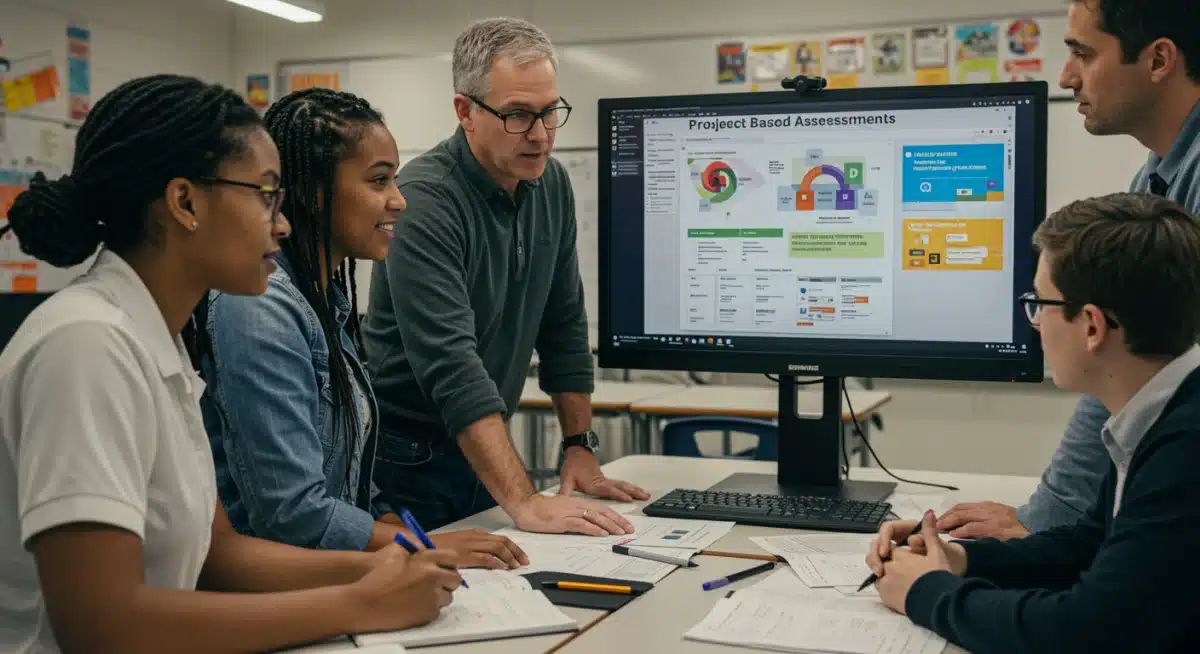
Project-based learning (PBL) assessments are a natural fit for competency-based frameworks. Students engage in extended projects that require them to apply knowledge and skills to real-world problems.
These assessments evaluate critical thinking, problem-solving, collaboration, and communication skills. They provide authentic contexts for students to demonstrate their competencies in a meaningful way.
- Application of knowledge to real-world scenarios.
- Development of transferable skills like teamwork and critical thinking.
- Demonstration of mastery through tangible products or presentations.
- Holistic evaluation of complex competencies.
Portfolio Assessments
Portfolio assessments involve students compiling a collection of their work over time, showcasing their growth and achievements. This method provides a comprehensive view of their learning journey and evolving competencies.
Portfolios can include various artifacts, such as essays, projects, presentations, and reflections. They empower students to take ownership of their learning and articulate their progress.
Performance-Based Tasks: Demonstrating Skills in Action
Performance-based tasks are becoming increasingly central to rethinking assessments 2026. These assessments require students to actively perform a task or create a product, demonstrating their abilities directly.
Unlike multiple-choice questions, performance tasks demand higher-order thinking skills and practical application of knowledge. They mirror real-world challenges, providing a more authentic measure of student competence.
Examples range from scientific experiments and theatrical performances to debates and engineering designs. These tasks offer rich data on student proficiency in complex areas.
Authentic Scenario Simulations
Simulations place students in realistic scenarios where they must make decisions and apply their knowledge, often under timed conditions. This method tests their ability to perform under pressure and adapt to unforeseen circumstances.
These simulations are particularly valuable for fields requiring immediate decision-making and practical skills. They provide a safe environment for students to practice and refine their abilities without real-world consequences.
Gamified Assessments: Engaging Students Through Play
Gamified assessments are emerging as an innovative method for rethinking assessments 2026 by integrating game elements into evaluation processes. This approach aims to increase student engagement, motivation, and reduce test anxiety.
By framing assessments as challenges or quests, educators can transform potentially stressful situations into enjoyable learning experiences. This often leads to more accurate representations of student knowledge and skills.
Gamification can involve points, badges, leaderboards, and narrative elements, making the assessment process more interactive and less intimidating for students. It encourages persistence and effort.
Interactive Learning Games
Interactive learning games embed assessment directly within gameplay. Students solve problems, answer questions, and demonstrate skills as they progress through a game’s levels or challenges.
These games can provide continuous, low-stakes assessment data without students even realizing they are being evaluated. This natural integration helps reduce the perceived pressure of traditional testing environments.
- Assessment disguised as engaging gameplay.
- Continuous data collection on student performance.
- Reduced test anxiety and increased motivation.
- Immediate feedback and opportunities for mastery.
AI-Powered Analytics: Enhancing Insights and Efficiency
Artificial Intelligence (AI) is set to play a transformative role in rethinking assessments 2026 by providing advanced analytics capabilities. AI can analyze vast amounts of student data to identify learning patterns, predict performance, and offer personalized interventions.
AI-powered tools can automate grading for certain types of assessments, freeing up educators’ time to focus on more complex instructional tasks. This efficiency is critical for managing diverse assessment methods.
Furthermore, AI can help in developing more sophisticated and unbiased assessment items. It can analyze student responses for deeper insights beyond simple correctness, such as conceptual understanding or common misconceptions.
Predictive Analytics for Student Success
Predictive analytics, driven by AI, can identify students who might be at risk of falling behind. By analyzing historical data and current performance, these systems can flag potential issues early, allowing for timely support.
This proactive approach helps educators intervene before academic problems become significant. It supports a more equitable education system by ensuring all students receive the necessary assistance to succeed.
Automated Feedback and Scoring
AI can provide automated, intelligent feedback on open-ended responses, essays, and even coding assignments. This immediate feedback helps students understand their mistakes and improve rapidly.
For educators, AI-powered scoring systems can significantly reduce the workload associated with grading. This allows them to allocate more time to personalized instruction and curriculum development, enhancing the overall quality of education.
Challenges and Considerations for Implementation
While the promise of rethinking assessments 2026 is significant, implementing these innovative methods comes with its own set of challenges. These include ensuring equitable access to technology, providing adequate teacher training, and addressing data privacy concerns.
Developing new assessment frameworks requires substantial investment in infrastructure and professional development. It’s crucial to ensure that these advancements do not inadvertently widen existing achievement gaps.
Careful planning and ongoing research are essential to navigate these complexities. The focus remains on creating a fair, effective, and future-ready assessment system for all U.S. students.
| Key Method | Brief Description |
|---|---|
| Personalized Learning | Assessments tailored to individual student needs and pace, leveraging technology like adaptive testing. |
| Competency-Based | Focus on demonstrating mastery of skills and knowledge, often through project-based learning and portfolios. |
| Performance-Based | Students actively perform tasks or create products to show abilities in real-world contexts. |
| AI-Powered Analytics | Utilizes AI for data analysis, predictive insights, and automated feedback to enhance assessment efficiency. |
Frequently Asked Questions About New U.S. Assessment Methods
The main goals include creating more equitable and accurate evaluations that reflect diverse student learning. The aim is to move beyond traditional standardized tests to better measure critical thinking, problem-solving, and practical skills for future readiness.
Personalized learning assessments adapt to individual student needs, offering tailored feedback and allowing students to progress at their own pace. This approach enhances engagement, reduces anxiety, and provides a more precise understanding of each student’s unique learning journey.
Technology is crucial, enabling adaptive testing, gamified assessments, and AI-powered analytics. These tools facilitate real-time feedback, personalized learning pathways, and efficient data analysis, transforming how evaluations are designed and delivered across U.S. schools.
Competency-based evaluations are designed to complement, and in some cases, partially replace traditional grading by focusing on mastery of specific skills. They emphasize what students can do rather than just what they know, encouraging deeper learning and practical application of knowledge.
Key challenges include ensuring equitable access to necessary technology, providing comprehensive teacher training for new methodologies, and addressing data privacy and security concerns. Overcoming these hurdles is essential for successful and widespread adoption across the U.S. education system.
Looking Ahead: The Future Trajectory of U.S. Education Assessments
The ongoing movement of rethinking assessments 2026 signifies a critical juncture for U.S. education. These innovative methods promise to deliver more meaningful and equitable evaluations, moving beyond outdated practices that often fail to capture the true breadth of student capabilities. As pilot programs expand and technologies mature, educators and policymakers alike are closely monitoring outcomes to refine strategies.
The shift towards personalized, competency-based, and performance-oriented assessments, augmented by AI and gamification, indicates a future where evaluation is an integrated, supportive part of the learning process. This evolution is not merely about changing tests but about fostering a more responsive and effective educational environment for all students.
Stakeholders should remain attentive to policy developments, research findings, and practical implementations as the U.S. continues its journey of rethinking assessments 2026. The success of these initiatives will ultimately hinge on collaborative efforts to ensure that assessments truly serve the needs of learners in the 21st century.
