Teacher Professional Development: Adapting to New Technologies with 2026’s Best Practices in the U.S.
Recent insights into Teacher Professional Development: Adapting to New Technologies with 2026's Best Practices in the U.S. highlight crucial shifts. Educators must embrace evolving digital landscapes to remain effective in the classroom.
This report details the foundational elements and emerging strategies for successful integration of technology. It focuses on practical applications and systemic support required for U.S. teachers.
Understanding these best practices is essential for institutions and individual educators navigating the complexities of modern educational demands. The emphasis remains on sustained, impactful learning experiences.

Recent insights into Teacher Professional Development: Adapting to New Technologies with 2026’s Best Practices in the U.S. highlight crucial shifts. Educators must embrace evolving digital landscapes to remain effective in the classroom.
This report details the foundational elements and emerging strategies for successful integration of technology. It focuses on practical applications and systemic support required for U.S. teachers.
Understanding these best practices is essential for institutions and individual educators navigating the complexities of modern educational demands. The emphasis remains on sustained, impactful learning experiences.
Teacher Professional Development: Adapting to New Technologies with 2026’s Best Practices in the U.S. is shaping today’s educational agenda with new details released by officials and industry sources. This update prioritizes what changed, why it matters, and what to watch next, in a straightforward news format.
The Evolving Landscape of Educational Technology
The rapid advancement of educational technology (EdTech) continues to redefine teaching and learning environments across the United States. As 2026 approaches, the imperative for teachers to not only be proficient but also innovative in their use of digital tools has never been clearer.
This shift necessitates a fundamental re-evaluation of traditional professional development models, moving towards more dynamic, continuous, and technology-integrated approaches. The goal is to equip educators with the skills and confidence to leverage technology for enhanced student outcomes.
Current trends indicate a move beyond basic digital literacy to more sophisticated applications of artificial intelligence, virtual reality, and data analytics in the classroom. This evolution profoundly impacts the design and delivery of effective Teacher Professional Development: Adapting to New Technologies with 2026’s Best Practices in the U.S. initiatives.
Foundational Elements of Effective Professional Development
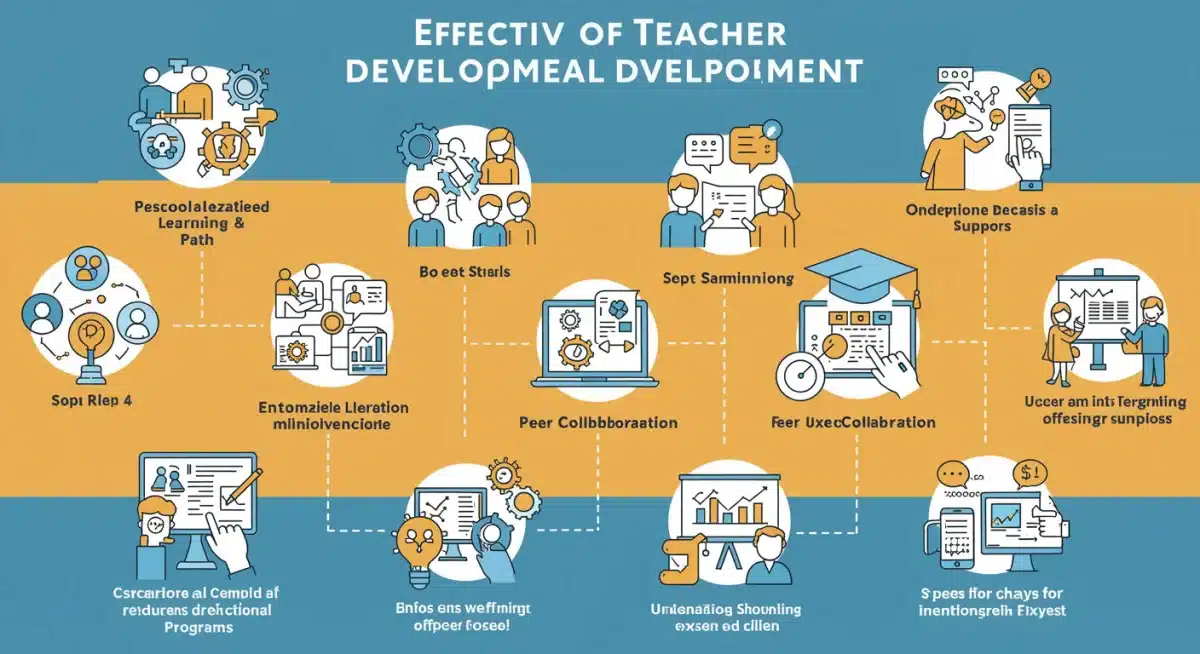
Effective professional development for technology integration requires a multifaceted approach, focusing on both pedagogical and technical skills. It moves beyond one-off workshops to sustained learning experiences that align with curriculum goals and teacher needs.
Key elements include personalized learning pathways, collaborative opportunities, and ongoing support systems. These components ensure that educators can apply new knowledge effectively and adapt to future technological changes with agility.
According to reports from the U.S. Department of Education, programs that incorporate these elements show significantly higher rates of successful technology adoption and improved student engagement. This evidence underscores the necessity of a holistic strategy for Teacher Professional Development: Adapting to New Technologies with 2026’s Best Practices in the U.S..
Personalized Learning Pathways for Educators
Recognizing that teachers possess varying levels of technological proficiency and diverse pedagogical needs, personalized learning pathways are becoming a cornerstone of modern professional development. These pathways allow educators to focus on specific areas of growth relevant to their subject matter and student demographics.
- Individualized assessments to determine current skill levels.
- Access to a curated library of resources, modules, and courses.
- Opportunities for self-paced learning and mastery-based progression.
- Mentorship and coaching tailored to individual development plans.
This tailored approach ensures that professional development is not a one-size-fits-all solution but rather a responsive and effective mechanism for continuous improvement. It empowers teachers to take ownership of their learning journey.
Collaborative Learning and Peer Support Networks
Collaboration among educators is crucial for fostering a culture of innovation and shared learning. Peer support networks provide a platform for teachers to exchange ideas, troubleshoot technical challenges, and collectively explore new teaching strategies.
- Structured professional learning communities (PLCs) focused on EdTech.
- Online forums and communities for sharing best practices and resources.
- Peer coaching and mentoring programs for technology integration.
- Joint project development and implementation with colleagues.
These collaborative environments build collective efficacy and reduce feelings of isolation often associated with adopting new technologies. They are vital for the successful implementation of Teacher Professional Development: Adapting to New Technologies with 2026’s Best Practices in the U.S..
Integrating Emerging Technologies: AI, VR, and Data Literacy
As technology advances, so too must the focus of teacher professional development. The integration of artificial intelligence (AI), virtual reality (VR), augmented reality (AR), and robust data literacy skills are no longer futuristic concepts but present-day necessities for educators.
These technologies offer transformative potential for personalized learning, immersive experiences, and data-driven instruction. However, their effective deployment hinges on teachers receiving comprehensive training that goes beyond mere tool usage to encompass pedagogical application and ethical considerations.
The emphasis for 2026 is on practical implementation, ensuring that teachers can seamlessly weave these advanced tools into their daily teaching practices. This proactive stance is fundamental for a progressive approach to Teacher Professional Development: Adapting to New Technologies with 2026’s Best Practices in the U.S..
Artificial Intelligence in the Classroom
AI tools are rapidly transforming how personalized learning is delivered, how administrative tasks are managed, and how students receive feedback. Teacher professional development must therefore equip educators with the knowledge to harness AI ethically and effectively.
Training should cover AI-powered adaptive learning platforms, intelligent tutoring systems, and tools for automated assessment and feedback. Understanding the underlying principles of AI and its limitations is also critical for informed integration.
According to a recent study by the EdTech Center at the University of Chicago, teachers trained in AI integration report higher levels of student engagement and improved learning outcomes. This highlights the tangible benefits of focused AI professional development.
Virtual and Augmented Reality for Immersive Learning
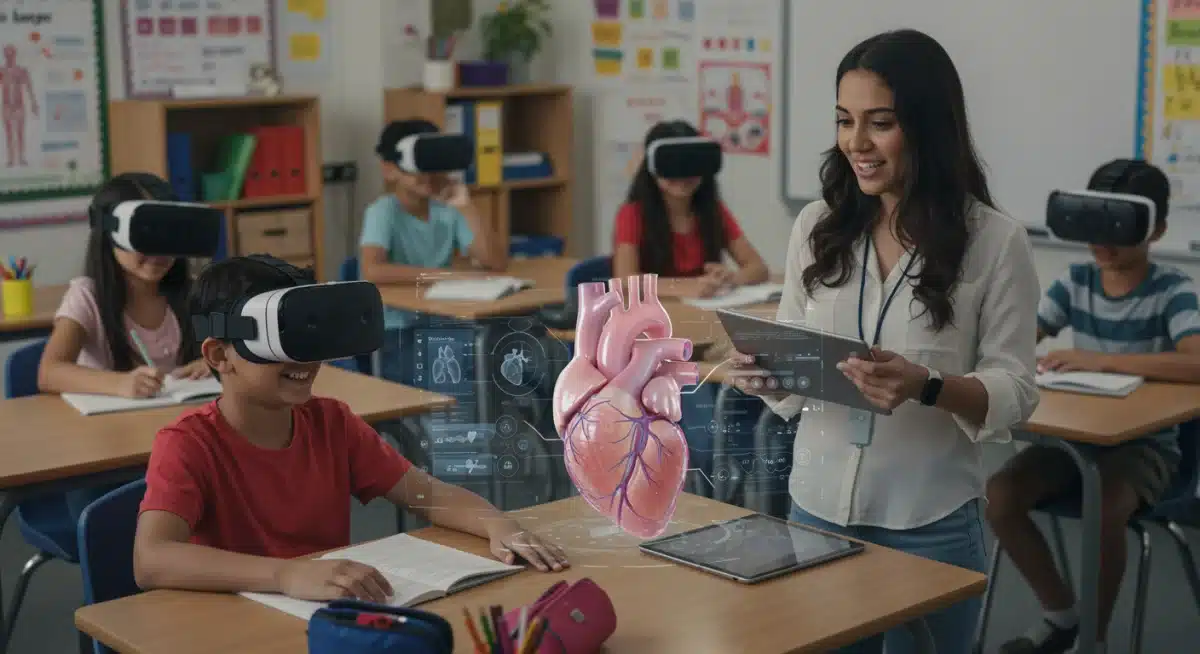
VR and AR offer unprecedented opportunities for creating immersive and engaging learning experiences that can transport students to historical events, scientific landscapes, or cultural sites. Professional development in this area focuses on content creation, curriculum integration, and classroom management within virtual environments.
Educators need to understand how to select appropriate VR/AR applications, design compelling learning activities, and troubleshoot technical issues. The goal is to move beyond novelty to utilize these technologies as powerful pedagogical instruments.
The National Council of Teachers of English (NCTE) has emphasized the potential of VR/AR to enhance literacy and critical thinking skills, provided teachers receive adequate preparation. This preparation is a core component of future-focused Teacher Professional Development: Adapting to New Technologies with 2026’s Best Practices in the U.S..
Data Literacy for Informed Instruction
In an increasingly data-rich educational environment, teachers must possess strong data literacy skills to effectively interpret student performance data, identify learning gaps, and tailor instruction. Professional development in this domain focuses on using various data analytics tools and understanding ethical data practices.
This includes training on learning management system (LMS) analytics, formative assessment data, and diagnostic tools. The ability to translate data into actionable insights is paramount for improving student achievement.
The Council of Chief State School Officers (CCSSO) advocates for comprehensive data literacy training as a core competency for all educators. Such training ensures that technology use is not just about access but about informed decision-making.
Addressing Equity and Access in Technology Integration
While technology offers immense potential, disparities in access and digital literacy can exacerbate existing educational inequities. Professional development programs must consciously address these challenges, ensuring all teachers and students can benefit.
This involves training on accessible technology tools, strategies for supporting students in low-resource environments, and culturally responsive pedagogy in digital contexts. The objective is to bridge the digital divide rather than widen it.
Equity and access are not merely add-ons but fundamental considerations in the design and implementation of any successful Teacher Professional Development: Adapting to New Technologies with 2026’s Best Practices in the U.S. initiative. Without this focus, the benefits of technology will remain unevenly distributed.
Digital Citizenship and Online Safety
As students spend more time engaging with digital platforms, teaching digital citizenship and online safety becomes an integral part of an educator’s role. Professional development must equip teachers to guide students in responsible and ethical online behavior.
- Curriculum development for digital citizenship education.
- Strategies for addressing cyberbullying and misinformation.
- Understanding data privacy and security protocols.
- Promoting positive digital footprints and online etiquette.
These skills are essential for creating safe and productive digital learning environments. They empower teachers to prepare students not just for academic success but for responsible participation in the digital world.
Sustained Support and Continuous Learning
The landscape of educational technology is constantly evolving, making sustained support and continuous learning indispensable for educators. One-time training sessions are insufficient; teachers require ongoing opportunities to refine their skills and stay updated with new innovations.
This includes access to help desks, tech coaches, and regular refresher courses that address emerging tools and pedagogical best practices. A culture of continuous learning ensures that initial professional development investments yield long-term benefits.
Institutions must allocate resources for these ongoing support structures, recognizing that technology integration is an iterative process. This commitment to sustained learning is a hallmark of effective Teacher Professional Development: Adapting to New Technologies with 2026’s Best Practices in the U.S..
Mentorship and Coaching Models
Implementing effective mentorship and coaching models provides teachers with personalized, on-demand support as they integrate new technologies. Experienced educators can guide their peers through challenges, share insights, and celebrate successes.
- Formal mentorship programs pairing experienced tech-savvy teachers with novices.
- Instructional coaching focused on specific technology integration strategies.
- Regular check-ins and feedback sessions to address implementation hurdles.
- Opportunities for co-teaching and collaborative lesson planning with technology.
These models foster a supportive environment where teachers feel empowered to experiment and grow. They are critical for translating professional development into practical classroom application.
Policy Frameworks and Institutional Support
The success of Teacher Professional Development: Adapting to New Technologies with 2026’s Best Practices in the U.S. ultimately depends on robust policy frameworks and dedicated institutional support. Without clear guidelines, funding, and administrative backing, even the most well-designed programs can falter.
Policies should mandate ongoing professional development, allocate sufficient budget for technology infrastructure and training, and recognize technology integration as a core competency for educators. Leadership commitment is paramount for creating a supportive ecosystem.
School districts and state education agencies play a pivotal role in establishing these frameworks and ensuring equitable access to resources. Their strategic vision dictates the pace and depth of technological advancement in education.
Measuring Impact and Refining Programs
To ensure that professional development initiatives are truly effective, it is crucial to establish clear metrics for measuring their impact. This involves evaluating not only teacher satisfaction but, more importantly, changes in pedagogical practice and student learning outcomes.
Data collection through surveys, classroom observations, and student performance analytics can provide valuable insights. Feedback loops should be established to continuously refine and improve professional development programs based on these findings.
This evidence-based approach ensures accountability and maximizes the return on investment in teacher training. It is an essential component of the iterative process underlying effective Teacher Professional Development: Adapting to New Technologies with 2026’s Best Practices in the U.S..
| Key Focus Area | Description |
|---|---|
| Personalized Learning | Tailored professional development paths for individual teacher needs and skill levels. |
| Emerging Technologies | Training on AI, VR/AR, and data literacy for practical classroom application. |
| Equity and Access | Strategies to bridge the digital divide and ensure inclusive technology integration. |
| Sustained Support | Ongoing mentorship, coaching, and resources for continuous teacher growth. |
Frequently Asked Questions About Teacher Professional Development
The main challenges often include a lack of sustained support, insufficient funding, and professional development that isn’t directly relevant to classroom needs. Overcoming these requires a shift towards personalized, continuous, and practical learning experiences for educators.
Ensuring equitable access involves providing flexible training formats, offering culturally responsive content, and addressing infrastructure disparities. It also means actively identifying and supporting teachers in underserved communities or those with limited prior technology exposure.
AI is set to revolutionize professional development by offering personalized learning paths, automating administrative tasks, and providing data-driven insights into teacher progress. It can also help curate relevant resources and facilitate intelligent tutoring for educators themselves.
Continuous professional development allows teachers to gradually integrate new skills, receive ongoing feedback, and adapt to evolving technologies. One-off workshops often lack the depth and sustained support needed for meaningful, long-term changes in teaching practice and technology adoption.
Success metrics should extend beyond attendance and satisfaction to include changes in teacher instructional practices, improvements in student engagement, and ultimately, enhanced student learning outcomes. Data from classroom observations, student performance, and teacher self-assessments are crucial.
Looking Ahead
The trajectory for Teacher Professional Development: Adapting to New Technologies with 2026’s Best Practices in the U.S. signals a critical period of transformation. Moving forward, the emphasis will remain on creating adaptable, relevant, and supportive learning ecosystems for educators. Institutions and policymakers must continue to prioritize sustained investment in both technology infrastructure and human capital.
The integration of advanced EdTech, coupled with a focus on equity and continuous learning, will be paramount. Monitoring the outcomes of these initiatives and remaining responsive to emerging needs will ensure that U.S. teachers are well-equipped to lead the next generation through an increasingly digital world.
