Micro-credentials for Workforce Readiness: A 2026 U.S. Guide
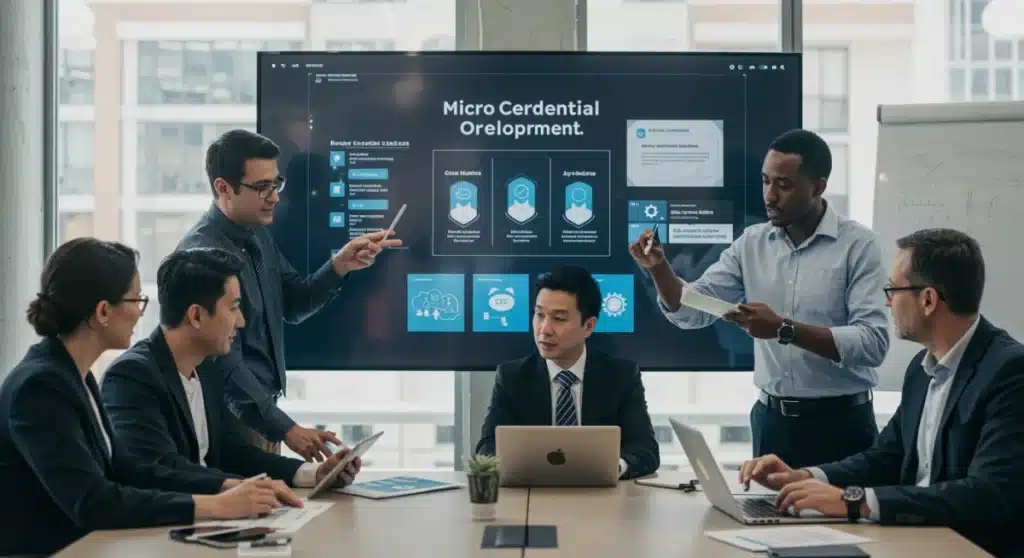
Latest developments on Micro-credentials for Workforce Readiness: A 2026 Guide for U.S. Educators and Employers, with key facts, verified sources and what readers need to monitor next in Estados Unidos, presented clearly in Inglês (Estados Unidos) (en-US).
Micro-credentials for Workforce Readiness: A 2026 Guide for U.S. Educators and Employers is shaping today’s agenda with new details released by officials and industry sources. This update prioritizes what changed, why it matters and what to watch next, in a straightforward news format.
The landscape of education and employment in the United States is undergoing a significant transformation, driven by the rapid evolution of technology and shifting economic demands. In this dynamic environment, micro-credentials are emerging as a pivotal tool for bridging skill gaps and enhancing workforce readiness, offering targeted, verifiable recognition of specific competencies.
This comprehensive guide delves into the essential role of micro-credentials, providing U.S. educators and employers with a forward-looking perspective towards 2026. It aims to clarify how these agile educational units are redefining professional development and talent acquisition strategies across various sectors.
Understanding the strategic implementation and benefits of micro-credentials is no longer optional but a critical imperative for both educational institutions preparing the next generation of workers and businesses seeking to maintain a competitive edge. The insights within this guide are designed to inform and empower stakeholders in navigating this evolving educational and professional terrain.
The Rise of Micro-credentials in U.S. Workforce Development
The U.S. labor market demands increasingly specialized skills, prompting a fundamental shift in how education and training are delivered and recognized. Traditional degrees often struggle to keep pace with these rapid changes, creating a growing need for more agile and focused learning solutions.
Micro-credentials offer a precise answer to this challenge by providing verifiable recognition for discrete skills or competencies, directly aligning with industry needs. This targeted approach ensures that learners acquire relevant, in-demand abilities, making them more competitive and adaptable in the modern workforce.
For educators, this means redesigning curricula to incorporate modular learning pathways, while employers gain a clearer understanding of a candidate’s specific capabilities. The widespread adoption of Micro-credentials for Workforce Readiness is fundamentally reshaping how talent is cultivated and deployed across the nation.
Defining Micro-credentials: Beyond Traditional Degrees
Micro-credentials are distinct from traditional degrees, focusing on specific, often technical or soft skills, rather than broad academic programs. They are typically shorter in duration, more flexible, and directly tied to demonstrable competencies, making them highly responsive to industry needs.
These credentials can take various forms, including digital badges, certificates, or verifiable records of achievement, issued by educational institutions, industry associations, or even employers themselves. Their verifiable nature allows for transparent skill validation, crucial in a competitive job market.
The emphasis on practical application and immediate utility positions micro-credentials as a vital component in a lifelong learning ecosystem. They empower individuals to continuously update their skill sets, ensuring sustained employability and career progression without committing to lengthy, expensive degree programs.
Driving Factors: Technology, Economy, and Skill Gaps
Several powerful forces are accelerating the adoption of micro-credentials across the U.S. foremost among these is technological advancement, which continually introduces new tools and processes, rendering existing skills obsolete and creating demand for new ones. The digital transformation of industries necessitates a workforce capable of adapting quickly.
Economic shifts, including automation and globalization, further intensify the pressure on workers to upskill and reskill. As job roles evolve, micro-credentials provide a practical pathway for individuals to acquire the specific competencies required for emerging positions, mitigating potential unemployment.
Crucially, persistent skill gaps reported by employers highlight a mismatch between available talent and required capabilities. Micro-credentials offer a targeted solution to close these gaps, allowing both current employees and job seekers to attain precise, in-demand skills efficiently, thereby enhancing overall workforce readiness.
Benefits for U.S. Educators and Employers by 2026
By 2026, the strategic integration of micro-credentials is set to deliver substantial benefits to both U.S. educators and employers, fostering a more dynamic and responsive talent ecosystem. These targeted credentials enhance program relevance for educational institutions and streamline talent acquisition and development for businesses.
Educators will find micro-credentials enable them to offer highly relevant, industry-aligned programs that attract a diverse student body, including working professionals seeking specific skill enhancements. This modular approach allows for greater flexibility and responsiveness to market demands, ensuring graduates are workforce-ready.
Employers, in turn, gain a powerful tool for identifying and validating specific skill sets among job applicants and current employees. This precision in skill assessment leads to more efficient hiring, reduced training costs, and a more adaptable workforce capable of meeting evolving business challenges, solidifying the importance of Micro-credentials for Workforce Readiness.
Empowering Educators: Curriculum Modernization and Reach
Micro-credentials offer U.S. educators an unprecedented opportunity to modernize their curricula, moving beyond traditional, rigid degree structures. By breaking down complex subjects into smaller, verifiable units, institutions can offer highly specialized training that directly addresses current industry needs, increasing their relevance.
This modularity also expands the reach of educational institutions, allowing them to serve a broader demographic, including adult learners and working professionals who require flexible, targeted learning options. Offering micro-credentials positions institutions as agile partners in lifelong learning, enhancing their impact and enrollment.
Furthermore, the data collected from micro-credential programs can provide valuable insights into skill demands and learning outcomes, enabling continuous improvement and innovation in educational offerings. This responsiveness ensures that educational programs remain aligned with the dynamic requirements of the U.S. workforce.
Streamlining Employer Strategies: Hiring and Upskilling
For U.S. employers, micro-credentials are revolutionizing how they approach hiring and internal talent development. These verifiable skill badges provide a clear, concise snapshot of a candidate’s specific competencies, allowing for more precise matching of skills to job requirements and reducing time-to-hire.
Beyond external recruitment, micro-credentials are invaluable for upskilling and reskilling existing employees, ensuring the workforce remains competitive and adaptable. Companies can implement targeted training programs, recognizing specific achievements, and fostering a culture of continuous learning that directly supports business objectives.
This approach leads to significant cost savings by reducing the need for extensive in-house training and improving employee retention through clear pathways for professional growth. The strategic adoption of Micro-credentials for Workforce Readiness empowers employers to build a resilient and highly skilled team capable of navigating future challenges.
Challenges and Considerations for Widespread Adoption
Despite their clear advantages, the widespread adoption of micro-credentials in the U.S. faces several challenges that educators and employers must address proactively. These hurdles range from establishing consistent quality standards to ensuring broad recognition and acceptance across diverse industries and educational sectors.
One significant concern is the lack of a universal framework for credentialing, which can lead to inconsistencies in quality and value perception. Without clear guidelines, the market risks fragmentation, making it difficult for individuals to navigate and for employers to trust the credentials’ validity.
Additionally, the integration of micro-credentials into existing hiring practices and academic credit systems requires careful planning and collaboration between all stakeholders. Overcoming these challenges is essential for micro-credentials to reach their full potential in enhancing U.S. workforce readiness.
Standardization and Quality Assurance
A critical challenge for micro-credentials is the establishment of robust standardization and quality assurance mechanisms. Currently, a diverse array of organizations issues these credentials, leading to varying levels of rigor and recognition. This inconsistency can undermine employer confidence and learner trust.
Developing a national or industry-specific framework for quality assurance will be paramount to ensure that micro-credentials consistently represent verifiable and valuable skills. This framework should involve collaboration between government agencies, educational bodies, and industry leaders to set clear benchmarks and evaluation criteria.
Without such standards, the market for micro-credentials risks becoming saturated with offerings of questionable value, ultimately hindering their ability to effectively address workforce needs. A unified approach to quality will solidify the credibility of Micro-credentials for Workforce Readiness.
Integration with Existing Systems and Recognition
The successful adoption of micro-credentials hinges on their seamless integration with existing educational and employment systems. This includes how they translate into academic credit, how they are recognized in hiring processes, and how they contribute to career advancement pathways.
Many traditional institutions are grappling with how to incorporate micro-credentials into their degree programs, while employers are still developing strategies for evaluating them alongside traditional resumes. Bridging these gaps requires dialogue and innovative solutions to ensure widespread acceptance and utility.
Efforts are underway to develop digital badging platforms and blockchain-based verification systems to enhance the portability and trustworthiness of micro-credentials. These technological solutions are crucial for ensuring that these new forms of recognition gain the necessary traction and become integral to the U.S. talent landscape.
Policy and Partnership Landscape Leading to 2026
The trajectory of micro-credentials towards 2026 is significantly influenced by an evolving landscape of policy developments and strategic partnerships across the U.S. Government initiatives, industry collaborations, and academic alliances are all playing crucial roles in shaping how these credentials are developed, recognized, and utilized.
Federal and state governments are increasingly exploring policy frameworks to support the growth and standardization of micro-credentials, recognizing their potential to address critical skill shortages. These policies aim to provide clarity and incentives for both providers and learners, accelerating adoption.
Simultaneously, partnerships between educational institutions and employers are becoming more prevalent, ensuring that micro-credential programs are directly aligned with industry demands. These collaborations are vital for building a coherent ecosystem where Micro-credentials for Workforce Readiness are truly effective.
Government Initiatives and Funding
U.S. government bodies, at both federal and state levels, are actively engaging with the micro-credential movement, recognizing its potential to bolster economic competitiveness and workforce resilience. Various initiatives are being launched to fund pilot programs, research best practices, and develop supportive policy frameworks.
These initiatives often focus on specific sectors facing acute skill shortages, such as technology, healthcare, and manufacturing, aiming to rapidly upskill and reskill workers. Funding mechanisms are also being explored to make micro-credentials more accessible and affordable for a broader range of learners, promoting equity.
The goal is to create an environment where micro-credentials are a recognized and valued component of the national education and training infrastructure. This governmental backing is crucial for driving scale and ensuring the long-term viability of Micro-credentials for Workforce Readiness solutions.
Industry-Education Collaborations
The strength of the micro-credential movement lies in robust collaborations between industry and education. Employers are increasingly partnering with community colleges, universities, and private training providers to co-create micro-credential programs that directly address their talent needs.
These partnerships ensure that the skills taught are precisely those demanded by the job market, making graduates highly employable and reducing the time and cost associated with post-hire training. Industry input is vital in curriculum design, assessment development, and program validation, ensuring relevance.
Examples include tech companies collaborating with universities to offer coding bootcamps with micro-credentials, or healthcare providers partnering with colleges for specialized clinical certifications. Such collaborations are foundational to the success of Micro-credentials for Workforce Readiness initiatives.
Emerging Trends and Future Outlook for 2026
As we approach 2026, several emerging trends are poised to further shape the landscape of micro-credentials and their impact on U.S. workforce readiness. These trends highlight a trajectory towards greater personalization, technological integration, and a more pervasive role for micro-credentials in professional development.
The increasing sophistication of AI and data analytics will allow for highly personalized learning pathways, where individuals can acquire micro-credentials tailored precisely to their career goals and existing skill sets. This customization will maximize learning efficiency and engagement.
Furthermore, the integration of blockchain technology is expected to revolutionize how micro-credentials are issued, verified, and stored, enhancing their security and portability. These technological advancements will solidify the role of Micro-credentials for Workforce Readiness as a cornerstone of future employment.
Personalized Learning Pathways and AI Integration
The future of micro-credentials is deeply intertwined with the advancement of personalized learning pathways, heavily influenced by artificial intelligence. AI algorithms can analyze an individual’s skills, learning style, and career aspirations to recommend specific micro-credentials that align perfectly with their development needs.
This tailored approach moves beyond one-size-fits-all education, offering learners efficient routes to acquire in-demand skills, reducing redundancy and maximizing impact. AI can also facilitate adaptive learning experiences within micro-credential programs, adjusting content difficulty and pace based on individual progress.
For educators, AI tools can help in identifying skill gaps across student populations and designing highly effective micro-credential offerings. For employers, personalized pathways mean a more efficient way to upskill their workforce, ensuring each employee gains the most relevant skills for their role, enhancing the effectiveness of Micro-credentials for Workforce Readiness.
Blockchain for Verification and Portability
Blockchain technology is set to become a game-changer for the verification and portability of micro-credentials. By leveraging decentralized, immutable ledgers, blockchain can provide an unalterable record of earned credentials, eliminating the risk of fraud and enhancing trust in the system.
This technology allows individuals to securely store and share their micro-credentials across various platforms and with different employers or educational institutions, making them highly portable. Learners will have sovereign control over their verified skill records, simplifying job applications and academic transfers.
For employers, blockchain-verified micro-credentials mean instant and irrefutable proof of a candidate’s skills, streamlining the hiring process and reducing due diligence. The integration of blockchain will significantly elevate the credibility and utility of Micro-credentials for Workforce Readiness in the coming years.
Implementation Strategies for Educators and Employers
Successful integration of micro-credentials requires deliberate and strategic planning from both educators and employers. For educational institutions, this means developing agile curricula and robust assessment methods, while businesses must establish clear frameworks for recognizing and utilizing these new forms of accreditation.
Educators should focus on designing micro-credential programs that are outcome-focused, industry-validated, and accessible to diverse learners, ensuring they meet real-world demands. This involves close collaboration with employers to identify critical skills and competencies.
Employers, on the other hand, need to integrate micro-credentials into their talent management systems, from job descriptions and hiring protocols to performance reviews and professional development plans. Effective implementation will maximize the benefits of Micro-credentials for Workforce Readiness.
Designing Effective Micro-credential Programs
For educators, designing effective micro-credential programs begins with thoroughly understanding current and future workforce needs. This requires continuous dialogue with industry partners to identify specific skills that are in high demand and where skill gaps exist.
Programs must be designed to be outcome-focused, with clear learning objectives and robust assessment methods that genuinely verify skill acquisition. Flexibility in delivery, including online and hybrid formats, is also crucial to accommodate working professionals and diverse learners.
Furthermore, institutions should consider how micro-credentials can stack or pathway into larger degree programs, providing learners with clear progression opportunities. This strategic design ensures that micro-credentials are not isolated achievements but integrate into broader educational and career trajectories, enhancing Micro-credentials for Workforce Readiness.
Integrating Micro-credentials into Talent Management
Employers must develop comprehensive strategies to integrate micro-credentials into their talent management lifecycle. This begins with updating job descriptions to explicitly mention desired micro-credentials, making them a recognized currency in the hiring process.
Internally, companies should establish clear pathways for employees to earn micro-credentials that align with professional development goals and career advancement opportunities. This not only upskills the workforce but also fosters employee engagement and retention by demonstrating investment in their growth.
Performance management systems can also incorporate micro-credential achievements as metrics for skill development and competency enhancement. By fully embedding micro-credentials into their talent strategies, employers can build a more agile, skilled, and future-ready workforce, leveraging the full potential of Micro-credentials for Workforce Readiness.
Case Studies: Success Stories in U.S. Workforce Readiness
Across the United States, numerous organizations are already demonstrating the transformative power of micro-credentials in enhancing workforce readiness. These success stories provide tangible evidence of how targeted, verifiable skills training is directly addressing industry needs and empowering individuals.
From community colleges partnering with local businesses to major corporations implementing internal upskilling programs, the applications are diverse and impactful. These examples highlight best practices and offer valuable insights for others looking to adopt similar strategies.
These case studies underscore the adaptability and effectiveness of micro-credentials in bridging specific skill gaps, accelerating career progression, and ultimately strengthening the U.S. economy. They serve as powerful testament to the value of Micro-credentials for Workforce Readiness.
Community College and Industry Partnerships
Many U.S. community colleges have forged successful partnerships with local industries to create highly relevant micro-credential programs. For instance, a community college in Michigan collaborated with automotive manufacturers to develop micro-credentials in advanced manufacturing techniques, including robotics and automation.
These programs, often short-term and intensive, provide workers with the precise skills needed by employers, leading to immediate job placement or career advancement. The college benefits from increased enrollment and industry relevance, while companies gain a pipeline of skilled talent.
Another example involves a college in Texas working with healthcare providers to offer micro-credentials in specialized medical coding and electronic health record management. These initiatives exemplify how Micro-credentials for Workforce Readiness are effectively tailored to regional economic demands.
Corporate Upskilling and Reskilling Initiatives
Major U.S. corporations are increasingly leveraging micro-credentials for internal upskilling and reskilling initiatives, ensuring their existing workforce remains competitive. A prominent tech company, for example, developed a suite of internal micro-credentials in cloud computing and cybersecurity for its employees.
These programs allow employees to acquire new, in-demand skills without leaving their current roles, fostering continuous learning and adaptability. The company benefits from a highly skilled workforce, reduced recruitment costs, and enhanced innovation, directly contributing to its strategic goals.
Similarly, a large financial institution implemented micro-credentials for its employees in data analytics and digital transformation, preparing them for future roles within the evolving finance sector. Such corporate investments in Micro-credentials for Workforce Readiness are critical for maintaining a competitive edge.
| Key Point | Brief Description |
|---|---|
| Skill Gap Solution | Micro-credentials offer targeted, verifiable skills to bridge critical workforce gaps. |
| Educator Benefits | Modernized curricula, broader reach, and enhanced program relevance for educators. |
| Employer Advantages | Streamlined hiring, effective upskilling, and a more adaptable workforce for businesses. |
| Future Trends | Personalized learning via AI and blockchain for secure credential verification. |
Frequently Asked Questions About Micro-credentials
Micro-credentials are verifiable, bite-sized certifications that validate specific skills or competencies. Unlike traditional degrees, they focus on targeted abilities, making them ideal for rapid skill acquisition and professional development. They are often digital, portable, and directly linked to industry demands, supporting agile learning for the U.S. workforce.
For U.S. employers, micro-credentials streamline hiring by providing clear evidence of specific skills, reducing recruitment time and costs. They also enable efficient upskilling and reskilling of current employees, fostering a flexible and adaptable workforce ready for evolving industry needs. This enhances productivity and competitiveness.
U.S. educators are crucial in designing and delivering micro-credential programs that meet industry standards. They modernize curricula, offering flexible learning pathways that attract diverse learners, including working professionals. Their collaboration with employers ensures programs are relevant and outcome-focused, enhancing workforce readiness significantly.
Recognition of micro-credentials is growing rapidly, especially in sectors with fast-evolving skill demands like technology, healthcare, and manufacturing. While universal recognition is still developing, strong industry-education partnerships and standardized quality assurance efforts are accelerating their acceptance across diverse U.S. industries.
By 2026, micro-credentials are expected to be integral to U.S. workforce development, driven by personalized learning pathways, AI integration, and blockchain verification. They will offer highly flexible, secure, and portable skill validation, becoming a cornerstone for continuous professional growth and economic adaptability.
Looking Ahead: The Enduring Impact of Micro-credentials
The rise of micro-credentials represents more than just a trend; it signifies a fundamental restructuring of how skills are acquired, recognized, and valued in the U.S. workforce. As we move towards 2026, their enduring impact will be seen in a more agile, responsive educational system and a workforce better equipped to meet the challenges of a rapidly changing global economy.
Educators and employers who proactively embrace and integrate micro-credentials into their strategic planning will be best positioned to thrive. This involves fostering continuous collaboration, championing standardization, and leveraging technological advancements to maximize their potential.
The future of work demands adaptability, and Micro-credentials for Workforce Readiness offer a powerful solution to cultivate a nation of lifelong learners and skilled professionals, ensuring sustained economic growth and individual prosperity across the United States.
