Beyond the Classroom: 4 Hybrid Learning Models for 2026
Latest developments on Beyond the Classroom: 4 Innovative Hybrid Learning Models Gaining Traction in the U.S. for 2026, with key facts, verified sources and what readers need to monitor next in Estados Unidos, presented clearly in Inglês (Estados Unidos) (en-US). These models are redefining educational landscapes, offering adaptability and personalized pathways for students nationwide.
Beyond the Classroom: 4 Innovative Hybrid Learning Models Gaining Traction in the U.S. for 2026 is shaping today’s agenda with new details released by educational institutions and technology providers. This update prioritizes what changed, why it matters and what to watch next, in a straightforward news format.
The shift towards more flexible and engaging educational structures is accelerating, driven by technological advancements and evolving student needs. Understanding these models is crucial for educators, parents, and policymakers alike as the U.S. education system continues to adapt.
This article delves into the specifics of these innovative approaches, highlighting their core components, benefits, and potential challenges. The goal is to provide a clear, objective overview of the trends defining the future of learning in the United States.
The Rise of Blended Synchronous Learning
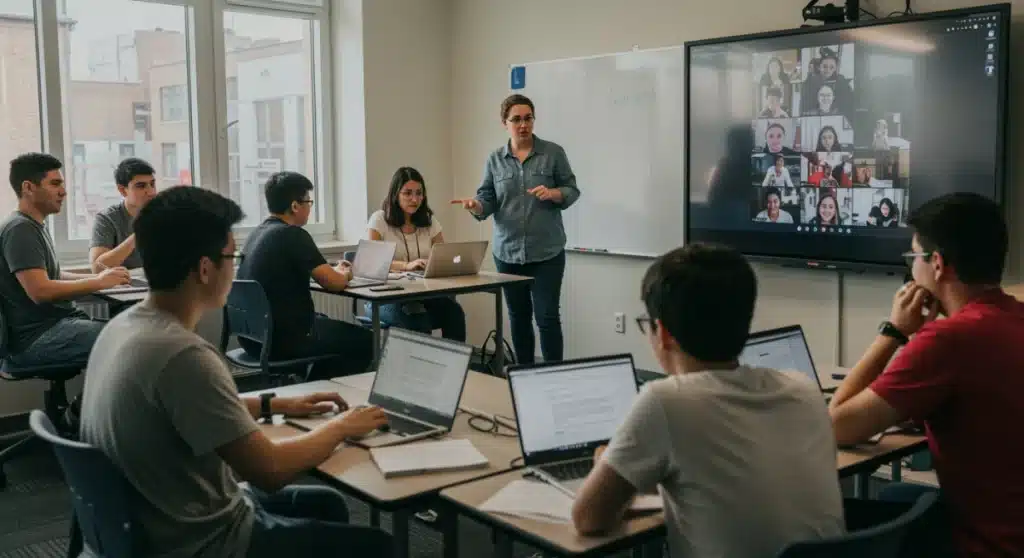
Blended synchronous learning represents a significant evolution in educational delivery, combining real-time online engagement with in-person classroom instruction. This model allows students to participate simultaneously, regardless of their physical location, fostering a dynamic and inclusive learning environment.
Educational institutions across the U.S. are increasingly adopting this approach to maximize flexibility and reach. It addresses the diverse needs of student populations, offering continuity and accessibility that traditional models often lack.
The integration of advanced communication tools and interactive platforms is central to the success of blended synchronous models. These technologies enable seamless interaction between remote and in-person participants, ensuring equitable access to instruction and collaborative opportunities.
Key Features and Technological Integration
This model leverages high-definition cameras, robust audio systems, and interactive whiteboards to bridge the physical distance between learners. Virtual breakout rooms and collaborative documents facilitate group work, making remote participation as engaging as being in the classroom.
Learning management systems (LMS) play a critical role in organizing content, assignments, and discussions. These platforms ensure that all students, regardless of their mode of attendance, have access to the same resources and support, promoting a unified learning experience.
- Real-time interaction between all students and the instructor.
- Integrated digital tools for collaboration and content sharing.
- Flexible attendance options: in-person or remote participation.
- Robust technical infrastructure to support simultaneous engagement.
Impact on Student Engagement and Outcomes
Blended synchronous learning has shown promising results in enhancing student engagement by offering choices that cater to individual learning styles and circumstances. Students can actively participate from home during inclement weather or personal commitments, reducing disruptions to their education.
Preliminary data suggests that this model can lead to improved academic outcomes, particularly for students who benefit from structured, real-time interaction but require the flexibility of remote access. The consistent connection with peers and instructors fosters a stronger sense of community and accountability.
However, successful implementation requires significant investment in technology and professional development for educators. Training teachers to effectively manage both in-person and remote students simultaneously is paramount to unlocking the full potential of these innovative hybrid learning models.
Competency-Based Hybrid Education
Competency-based hybrid education shifts the focus from time spent in class to the mastery of specific skills and knowledge. Students progress at their own pace, demonstrating proficiency before moving on, combining online modules with targeted in-person support.
This model is particularly gaining traction for its potential to personalize learning pathways, catering to individual student needs and accelerating or decelerating progress as required. It moves away from the traditional one-size-fits-all approach, recognizing diverse learning speeds.
The structure often involves online learning platforms where students access content and complete assessments, complemented by in-person sessions for hands-on activities, one-on-one mentoring, or collaborative projects. This blend ensures both theoretical understanding and practical application.
Personalized Learning Pathways
Students in competency-based hybrid programs receive tailored learning plans, allowing them to focus on areas where they need more support and bypass concepts they have already mastered. This efficiency can significantly reduce the time and cost of education while improving outcomes.
Assessments are continuous and embedded within the learning process, providing immediate feedback and opportunities for remediation. This iterative approach helps students build a strong foundation of knowledge and skills before advancing, fostering deeper understanding.
- Flexible pacing based on individual student mastery.
- Clear learning objectives and measurable competencies.
- Integrated online modules and in-person practical sessions.
- Continuous assessment and personalized feedback loops.
Challenges and Implementation Strategies
Implementing competency-based hybrid education requires a fundamental rethinking of curriculum design and assessment practices. Educators must develop granular learning objectives and robust assessment tools that accurately measure student proficiency.
Furthermore, technology infrastructure must support adaptive learning platforms that can track student progress and recommend personalized resources. Adequate training for teachers to act as facilitators and mentors, rather than just lecturers, is also essential for these innovative hybrid learning models.
Ensuring equity in access to technology and support services is another critical consideration. Disparities in home internet access or device availability can hinder student participation, necessitating proactive strategies to bridge the digital divide and ensure all students can thrive in these environments.
The Micro-Credentialing Hybrid Framework
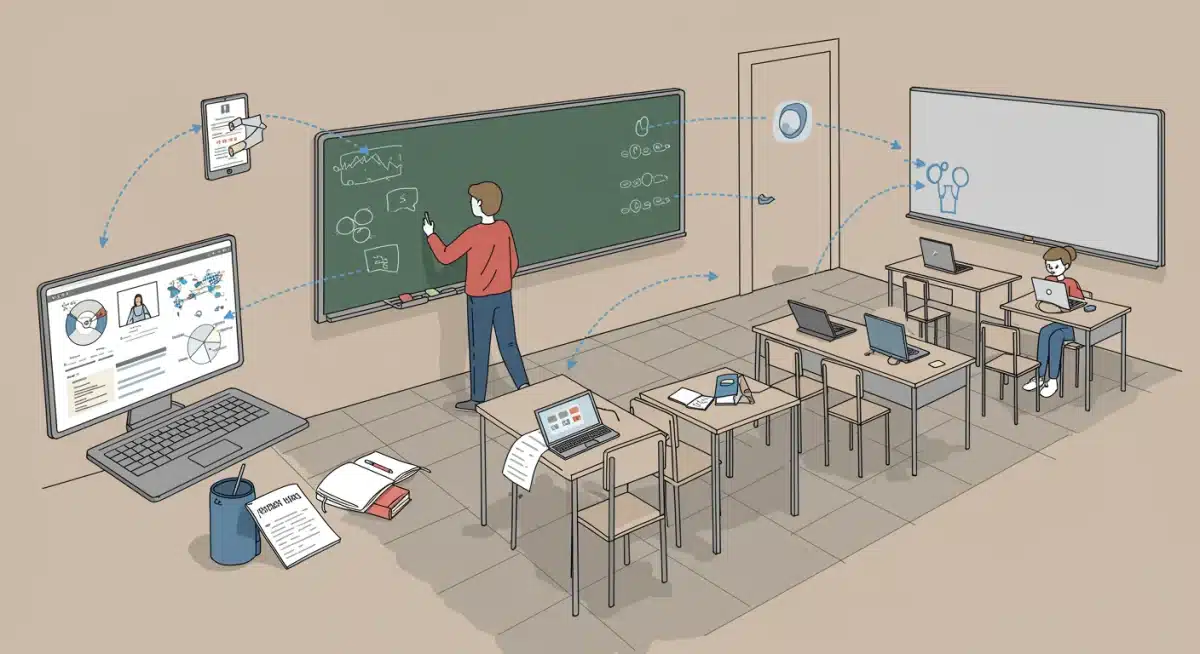
Micro-credentialing within a hybrid framework offers specialized, short-term learning opportunities that lead to verifiable digital badges or certificates. These credentials focus on specific skills, often in high-demand areas, complementing broader degrees or standalone professional development.
This model is increasingly popular for its agility and responsiveness to workforce demands, allowing individuals to quickly acquire or update skills without committing to lengthy traditional programs. It represents a flexible pathway to career advancement and continuous learning.
The hybrid aspect means that learning can occur through online modules, virtual workshops, and in-person practical sessions, providing a comprehensive and accessible learning experience. This flexibility makes micro-credentials attractive to working professionals and lifelong learners.
Targeted Skill Acquisition and Career Advancement
Micro-credentials allow learners to target specific skills directly relevant to their career goals or current job requirements. This precision in learning ensures that the acquired knowledge is immediately applicable, offering a tangible return on investment for both individuals and employers.
Institutions are partnering with industry leaders to design micro-credential programs that meet real-world needs, ensuring the relevance and value of the credentials. This collaboration helps bridge the gap between academic offerings and industry expectations, preparing students for evolving job markets.
- Focused on specific, verifiable skills and competencies.
- Flexible learning formats: online, in-person, or blended.
- Rapid acquisition of in-demand skills for career growth.
- Industry-aligned content and assessment for immediate applicability.
Scalability and Accessibility for Diverse Learners
The hybrid nature of micro-credentialing makes it highly scalable and accessible to a broad audience, including those in remote areas or with busy schedules. Online components provide convenience, while in-person sessions offer valuable networking and hands-on experience.
This framework democratizes access to specialized training, enabling individuals from various socioeconomic backgrounds to enhance their skill sets and improve their employment prospects. It supports a culture of continuous learning and adaptability in a rapidly changing world.
However, ensuring the quality and recognition of micro-credentials across different industries and institutions remains a challenge. Establishing clear standards and robust validation processes is crucial for these innovative hybrid learning models to gain widespread acceptance and trust.
Experiential Learning Hybrid Ecosystems
Experiential learning hybrid ecosystems integrate real-world experiences, such as internships, apprenticeships, and service-learning projects, with structured academic coursework delivered through a blended format. This model emphasizes learning by doing, connecting theory with practice.
This approach is designed to provide students with practical skills, critical thinking abilities, and a deeper understanding of course material through direct engagement. It prepares them for future careers by immersing them in authentic professional environments.
The hybrid component allows for a flexible blend of online preparatory modules, virtual mentoring, and in-person fieldwork or project participation. This ensures students can balance their academic responsibilities with their experiential learning commitments, maximizing impact.
Real-World Application and Skill Development
Students in experiential learning hybrid ecosystems gain invaluable hands-on experience, applying classroom knowledge to solve real-world problems. This practical application solidifies their understanding and develops essential soft skills like teamwork, problem-solving, and communication.
These programs often involve partnerships with local businesses, non-profits, and community organizations, providing students with diverse opportunities to explore career paths and build professional networks. The feedback from these experiences is integrated back into their academic learning.
- Direct application of academic knowledge in real-world settings.
- Development of critical soft skills through practical experience.
- Mentorship and networking opportunities with industry professionals.
- Integrated online and in-person components for flexible participation.
Measuring Impact and Ensuring Quality
Assessing the learning outcomes in experiential hybrid models requires a comprehensive approach that goes beyond traditional exams. Portfolios, project presentations, and supervisor evaluations are often used to measure skill development and practical competency.
Ensuring the quality of experiential opportunities and their alignment with academic goals is crucial. Institutions must vet partner organizations and provide clear guidelines for student participation and supervision, ensuring a meaningful and safe learning experience.
The logistical complexities of managing diverse experiential placements and coordinating schedules for students and mentors also present challenges. However, the profound benefits in terms of student readiness for the workforce make these innovative hybrid learning models a compelling option for the future of education.
Funding and Policy for Hybrid Learning Adoption
The widespread adoption of hybrid learning models in the U.S. hinges significantly on robust funding and supportive policy frameworks. Federal and state initiatives are increasingly recognizing the potential of these models, allocating resources for technology infrastructure and educator training.
Investment in high-speed internet access, particularly in underserved rural and urban areas, is paramount to ensuring equitable participation in hybrid programs. Policies addressing digital equity are critical for the success of Beyond the Classroom: 4 Innovative Hybrid Learning Models Gaining Traction in the U.S. for 2026.
Furthermore, policies that encourage innovation in curriculum design and assessment methods are essential. This includes flexibility in accreditation standards to accommodate non-traditional learning pathways and competency-based progression, supporting the evolution of hybrid learning models.
Government Initiatives and Private Partnerships
Several government programs are now directing funds towards educational technology and professional development for hybrid instruction. These initiatives aim to equip schools and teachers with the tools and skills necessary to implement effective hybrid learning models.
Private sector partnerships are also playing a crucial role, with technology companies collaborating with educational institutions to develop tailored solutions and provide training. These collaborations accelerate the deployment of cutting-edge tools and platforms for hybrid learning.
- Increased federal and state funding for educational technology.
- Policies promoting digital equity and broadband access.
- Flexibility in accreditation for innovative learning models.
- Collaborations between educational institutions and tech companies.
Addressing Equity and Access Challenges
Despite increased funding, significant disparities in access to technology and high-quality instruction persist. Policy efforts must focus on targeted interventions to support students from low-income backgrounds and those with special needs, ensuring they are not left behind in the shift towards hybrid learning.
This includes providing devices, internet hotspots, and dedicated technical support to students who need it most. Ensuring that all students have the necessary resources to participate fully in innovative hybrid learning models is a moral and educational imperative.
Moreover, policies must address the need for ongoing professional development for educators. Teachers require continuous training to adapt to new technologies and pedagogical approaches inherent in hybrid learning environments, maintaining the quality and effectiveness of instruction.
Future Outlook and Scalability of Hybrid Models
The trajectory for hybrid learning models in the U.S. points towards continued growth and refinement, with institutions increasingly exploring scalable solutions. The lessons learned from recent educational shifts are informing strategies for more resilient and adaptable learning ecosystems.
As technology evolves, the capabilities of hybrid platforms will expand, offering even more immersive and personalized experiences. This continuous innovation will further blur the lines between traditional and virtual classrooms, enhancing educational access and outcomes.
The focus will be on developing robust frameworks that can be easily adapted to various educational contexts, from K-12 to higher education and professional development. The scalability of these innovative hybrid learning models is key to their long-term success and widespread adoption.
Technological Advancements and Pedagogical Innovation
Advances in artificial intelligence (AI) and virtual reality (VR) are set to revolutionize hybrid learning, offering intelligent tutoring systems and immersive simulated environments. These technologies can provide highly personalized feedback and engaging learning experiences.
Pedagogical innovation will complement technological advancements, with educators developing new instructional strategies specifically designed for hybrid environments. This includes fostering deeper student engagement and facilitating collaborative learning across diverse settings.
- Integration of AI and VR for enhanced learning experiences.
- Development of new pedagogical strategies for hybrid environments.
- Expansion of personalized and adaptive learning pathways.
- Focus on interoperability and seamless integration of learning tools.
Sustaining Growth and Addressing Future Challenges
Sustaining the growth of hybrid learning models requires ongoing investment in research and development, as well as a commitment to continuous improvement. Institutions must regularly evaluate the effectiveness of their hybrid programs and adapt to emerging needs and technologies.
Addressing potential challenges such as digital fatigue, maintaining student well-being, and ensuring data privacy will be crucial. Proactive measures and ethical considerations must be integrated into the design and implementation of future innovative hybrid learning models.
Ultimately, the long-term success of hybrid learning will depend on its ability to provide equitable, high-quality education that prepares students for the complexities of the 21st century. The evolution of Beyond the Classroom: 4 Innovative Hybrid Learning Models Gaining Traction in the U.S. for 2026 will be a defining factor in the future of American education.
| Key Model | Brief Description |
|---|---|
| Blended Synchronous | Real-time online and in-person participation simultaneously. |
| Competency-Based | Progress based on skill mastery, personalized pacing. |
| Micro-Credentialing | Short, focused learning for specific, verifiable skills. |
| Experiential Ecosystems | Real-world application through internships and projects. |
Frequently Asked Questions About Hybrid Learning Models
A hybrid learning model combines elements of online and in-person instruction, offering flexibility and diverse learning opportunities. These models integrate digital tools with traditional classroom methods, allowing students to engage in both virtual and physical environments effectively.
These innovative hybrid learning models are gaining traction due to increased demand for flexible education, technological advancements, and a focus on personalized learning. They offer adaptability that appeals to diverse student needs and prepare learners for a dynamic future workforce.
Competency-based hybrid education emphasizes mastery of skills rather than seat time. Students progress at their own pace, demonstrating proficiency in specific competencies through a blend of online and in-person activities, ensuring a deeper understanding of the material.
Micro-credentials offer focused, verifiable skill acquisition within hybrid frameworks. They provide short-term, targeted learning pathways that complement traditional degrees or enhance professional skills, often using a blend of online modules and practical in-person sessions.
Key challenges include ensuring equitable access to technology, providing adequate professional development for educators, and developing supportive policy frameworks. Overcoming the digital divide and securing consistent funding are also critical for the widespread success of hybrid learning models.
Looking Ahead
The evolution of Beyond the Classroom: 4 Innovative Hybrid Learning Models Gaining Traction in the U.S. for 2026 signifies a pivotal moment for American education. As these models continue to mature, they promise to reshape how knowledge is acquired and applied. The focus remains on leveraging technology and pedagogical innovation to create equitable, engaging, and effective learning environments that prepare students for the complexities of the future. Maintaining momentum will require sustained investment, adaptive policies, and a collaborative spirit among all stakeholders.
